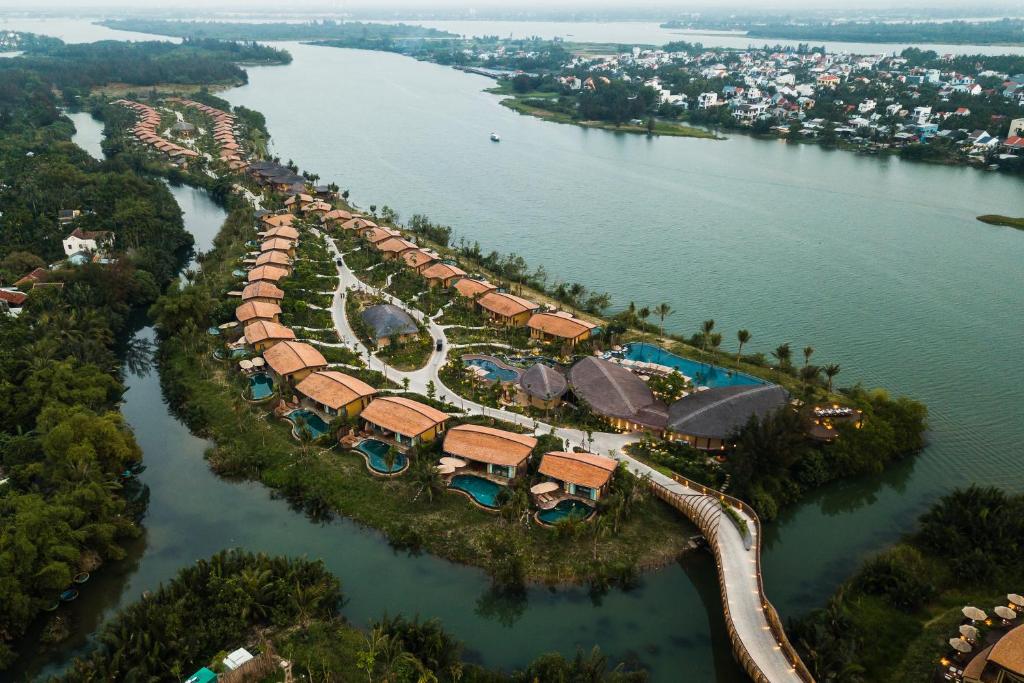


Understanding sun orientation correctly is the first step toward smart home design.
- Sun orientation: The direction from which sunlight directly hits a building throughout the day and across seasons.
- Wind direction: The predominant direction of airflow in an area, which typically changes with the seasons (e.g., Northeast monsoon, Southwest monsoon).
Important: Many people confuse sun orientation with wind direction, or focus only on feng shui while overlooking physical factors. However, in architectural design, analyzing both sun orientation and wind direction is crucial for creating a comfortable and cool living space.
Why Does ToAM Study Sun Orientation in Hội An Home Design?
How does sun orientation directly impact health?
- Direct effect on indoor temperature and humidity: Direct sunlight carries significant heat, especially in the afternoon, making interior spaces hot and uncomfortable. Humidity can also be affected by temperature and poor ventilation.
- Impact on health and mood: An overly hot, stuffy house affects sleep quality, causes fatigue and discomfort, and can even create stress for family members. Conversely, the right amount of natural light brings positive energy.
- Energy costs (air conditioning, fans): When a house receives direct sunlight, you’ll need to use air conditioning and fans more frequently, leading to soaring electricity bills—wasteful and not environmentally friendly.
- Durability of materials and furnishings: Prolonged intense sunlight can fade paint, warp wood, damage furniture, and reduce the lifespan of building materials and household items.
Primary Sun Directions in Hội An and Their Effects
To analyze the primary sun directions in Hội An, we need to understand both general solar patterns and the specific geographic characteristics of Central Vietnam’s coastal region.
General solar patterns (applicable to Vietnam): morning sun from the East (Northeast → Southeast), afternoon sun from the West (Northwest → Southwest). At Vietnam’s latitude (~15–23° North), the summer sun rises high and tilts northward, while the winter sun sits lower and tilts southward.
Hội An lies near the East Sea in Central Vietnam, with a tropical monsoon climate and minimal mountain barriers to the east—meaning it receives direct sunlight from the sea. Therefore, sun orientation here has several notable characteristics:
- Morning (6am–10am) sun from East – Southeast: beautiful, soft light reflected from water surfaces (rivers, sea). This is a very favorable orientation for homes and homestays.
- Midday (10am–2pm), sun shines almost directly from above. Summer sun is intense with significant heat load; roofs and terraces bear the brunt.
- Afternoon (2pm–6pm), sun from West – Southwest is very hot and harsh, especially from April to August. This is the worst sun direction in Hội An.
Flexible Function Placement Based on Orientation
- Prioritize main rooms toward cooler orientations: Living rooms, master bedrooms, and dining areas—frequently used spaces—are positioned facing South or Southeast to catch cool breezes and soft light.
- “Sacrifice” secondary rooms to harsh sun directions: Less-used areas such as storage rooms, bathrooms, staircases, elevators, or solid walls are placed on the West or Northwest side to serve as thermal buffers for interior spaces.
Smart Architectural Heat-Protection Solutions
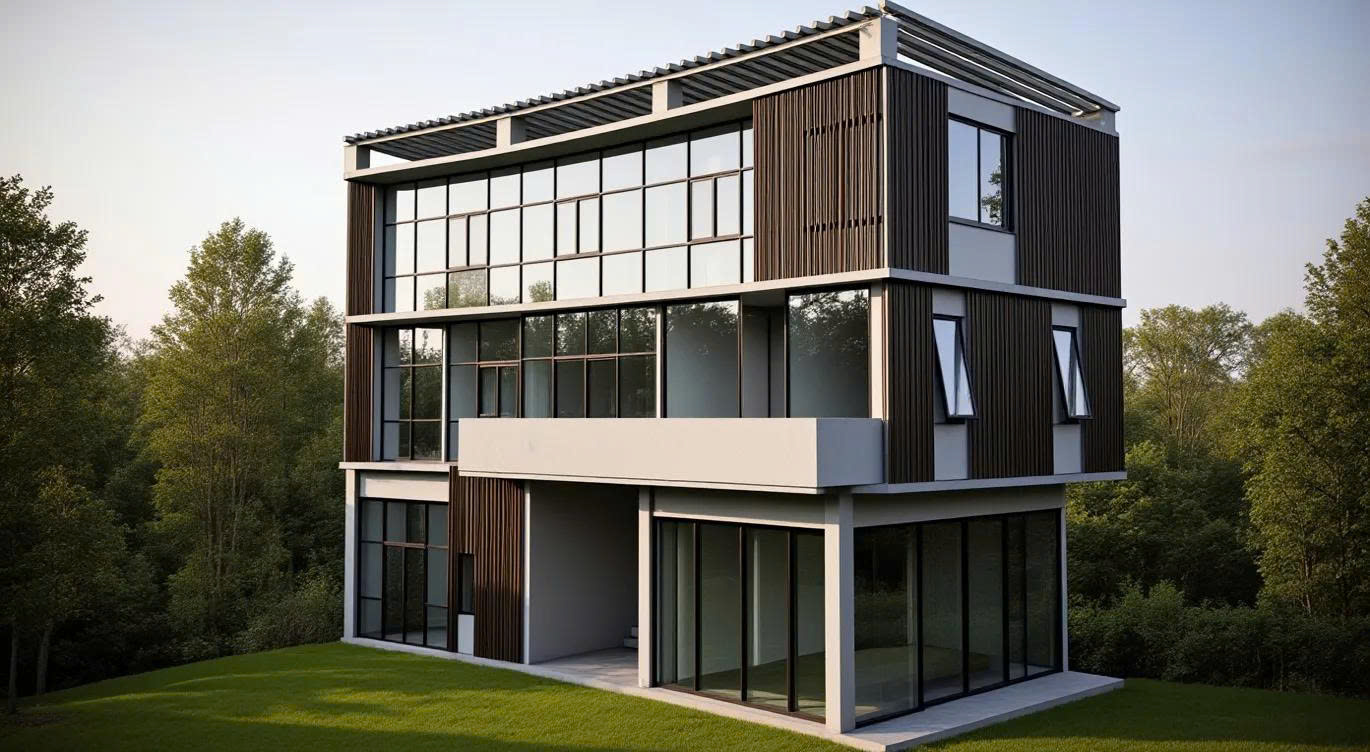
- Diverse sun-shading louver systems: Using concrete, wood, or metal louvers on sun-exposed facades blocks direct sunlight while maintaining ventilation and aesthetics.
- Deep eaves, balconies, and canopies: Designing these elements with appropriate projection creates shadow zones, shielding windows and walls from direct sun.
- Double-layer walls and insulation materials: Using double-brick walls with an air gap or combining with insulation materials (such as XPS foam or insulated panels) reduces heat transmission through walls.
- Effective skylights and voids: Creating vertical voids, skylights, or roof ventilation openings produces air convection effects, allowing hot air to escape while drawing cool air into the home.
Landscape and Greenery Solutions
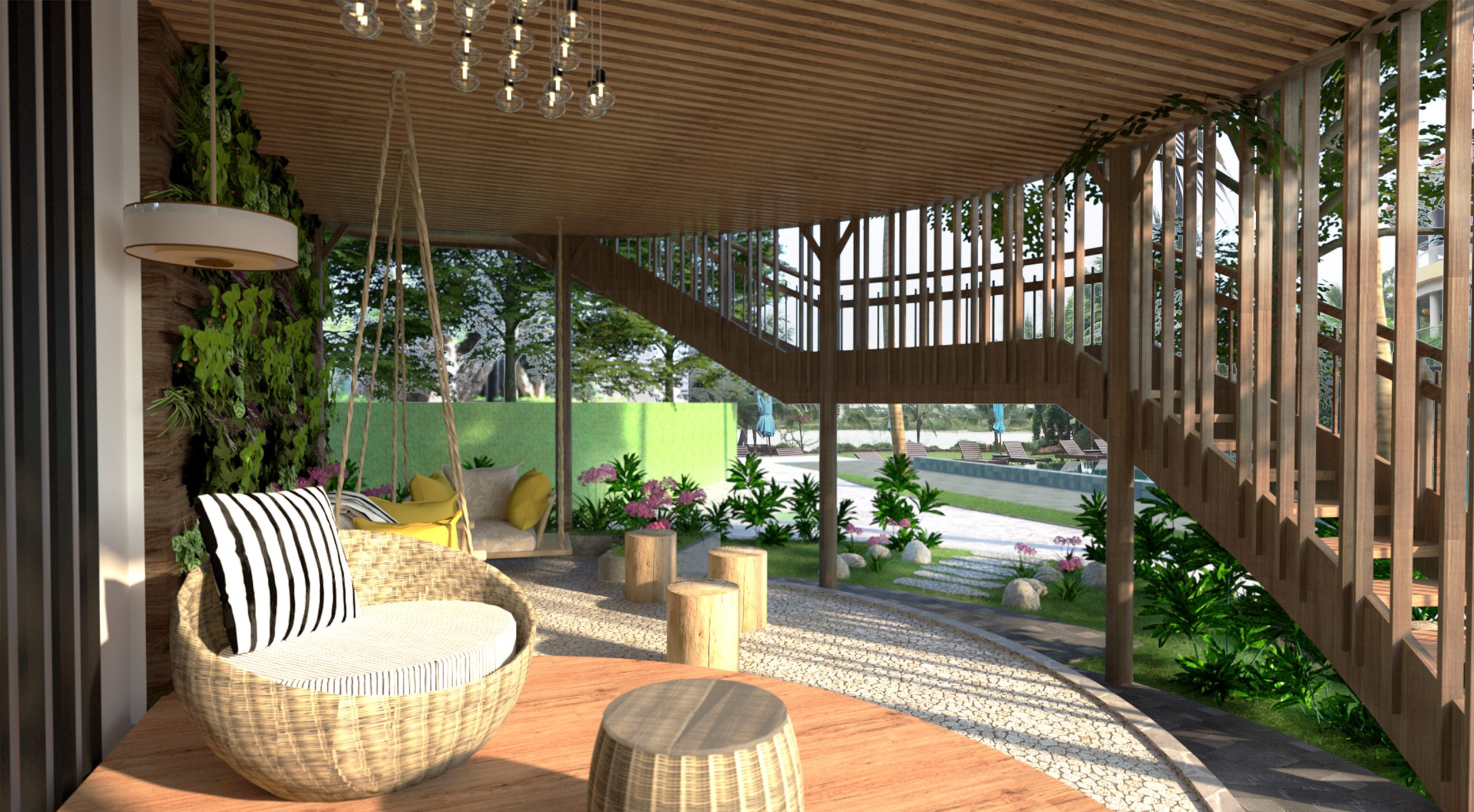
- Plant large trees: Position broad-canopy trees on the West and Northwest sides to provide natural shade and reduce wall surface temperatures.
- Design water features and gardens: Water elements not only enhance aesthetics but also help regulate temperature and create natural cool breezes for the home.
Appropriate Material Solutions
- Low-E glass and heat-reflective glass: These special glass types reduce heat absorption from sunlight while maintaining brightness.
- Heat-reflective paint and exterior cladding: Using specialized paints or cladding materials with heat-reflective properties reduces thermal radiation into the home.
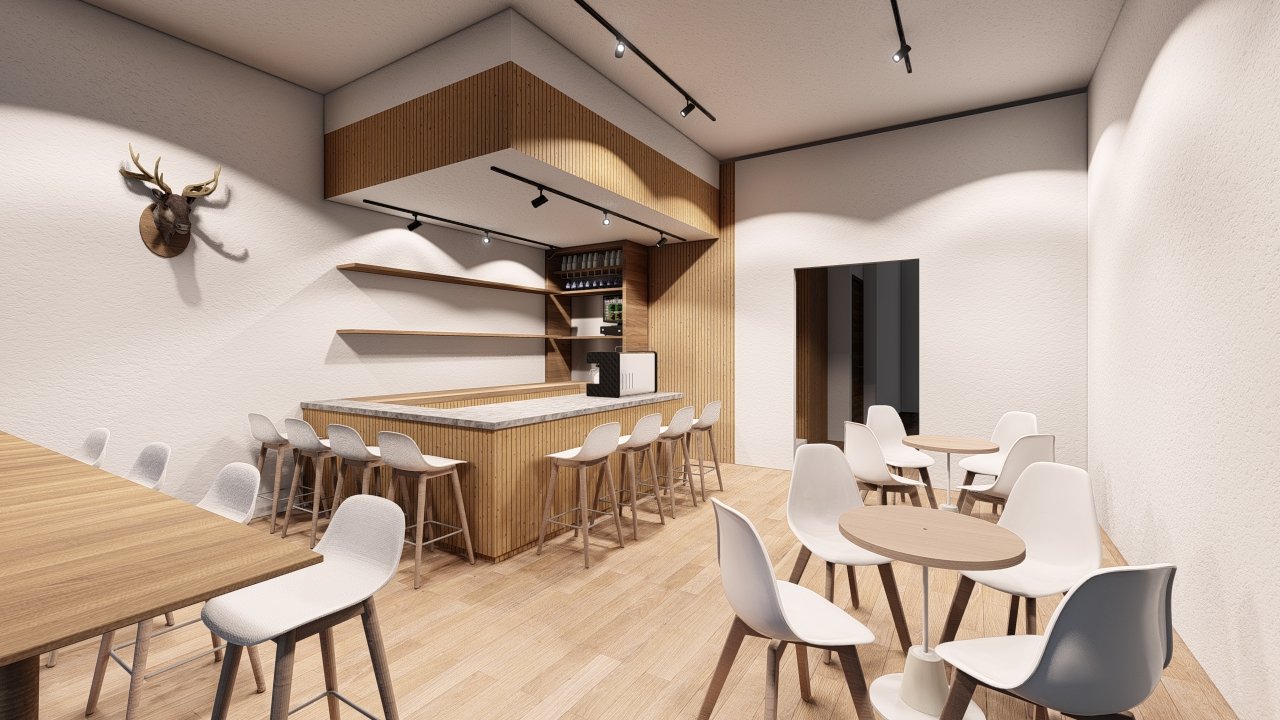
- Natural materials: Terracotta bricks, stone, and natural wood have excellent heat-dissipating properties and create a sense of coolness.
Natural and Mechanical Ventilation Solutions
- Design symmetrical openings: Position doors and windows in symmetrical locations to create cross-ventilation and good air circulation.
- Use exhaust fans and ceiling fans: These supplement natural ventilation, especially in enclosed areas.
As overall temperatures continue to rise, instead of letting sun orientation become a worry when building your home, let the ToAM team help you design a beautiful, cool house that welcomes breezes and sunlight in the smartest way possible.